准备工作

STM32是ST公司基于ARMCortex-M内核开发的32位微控制器

stm32F1的所有外设
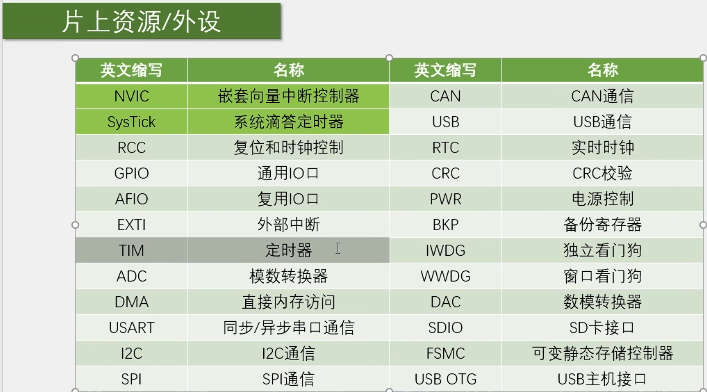
外设表

约定成俗的杜邦线:黑色接地(gnd),红色接vcc,黄或橙接时钟,蓝色或绿色接数据线,白色或灰色或紫色接控制线或其他线

GPIO输出
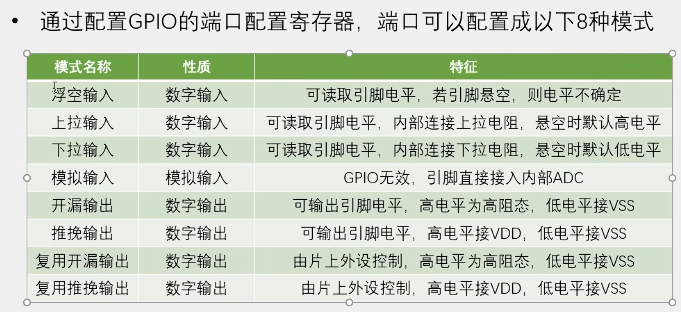
8种模式

GPIO介绍

在STM32中I/O引脚,又称GPIO,可以被软件设置成各种不同的功能及模式。

分为输入(4 种)和输出 / 复用(4 种)两大类,核心区别是引脚是否主动输出电平、是否由外设复用;

GPIO相关寄存器配置

调用库函数来配置寄存器,可以脱离底层寄存器操作,使得开发效率提高,同时易于阅读和维护。GPIO相关的函数和定义分布在固件库文件stm32f10x_gpio.c和头文件stm32f10x_gpio.h中。

GPIO——IniTypeDef结构体的定义:

1
2
3
4
5
6
7
typedef struct
{
unit16_t GPIO_Pin; //GPIO引脚
GPIOMode_TypeDef GPIO_Mode; //GPIO模式
GPIOSpeed_TypeDef GPIO_speed; //GPIO速度
}

八个模式

1
2
3
4
5
6
7
8
9
10
11
typedef enum
{ GPIO_Mode_AIN = 0x0,//模拟输入模式
GPIO_Mode_IN_FLOATING = 0x04,//浮空输入模式
GPIO_Mode_IPD = 0x28,//下拉输入模式
GPIO_Mode_IPU = 0x48,//上拉输入模式
GPIO_Mode_Out_OD = 0x14,//开漏输出模式
GPIO_Mode_Out_PP = 0x10,//推挽输出模式
GPIO_Mode_AF_OD = 0x1C,//复用功能开漏输出
GPIO_Mode_AF_PP = 0x18//复用功能推挽输出
}GPIOMode_TypeDef;

OLED

串口调试:通过串口通信,将调试信息发送到电脑端,电脑使用串口助手显示调试信息

显示屏调试:直接将显示屏连接到单片机,将调试信息打印在显示屏上

Keli调试模式:借助Keli软件的调试模式,可使用单步运行,设置断点,查看寄存器及变量等功能
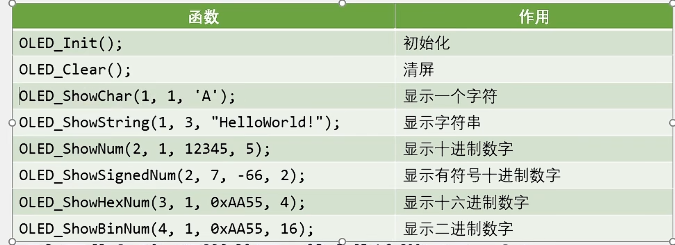
OLED驱动函数

外部中断

中断:在主程序运行过程中,出现了特定的中断触发条件,使得cpu暂停当前正在运行的程序,转而去处理中断程序,处理完成后又返回原来被暂停的位置继续运行。

中断嵌套:当一个中断程序正在运行时,又有新的更高优先级的中断源申请中断,cpu再次暂停当前中断程序,转而去处理新的中断程序,处理完成后依次进行返回。

stm32中断:68个可屏蔽中断通道(就是中断源)。

NCIC的中断优先级由优先级寄存器的4位(0-15)决定,这4位可以进行切分,分为高n位的抢占优先级和低4-n位的响应优先级。

抢占优先级高的可以中断嵌套,响应优先级高使的可以优先排队,抢占优先级和响应优先级均相同的按中断号排队。

定时器

定时器可以对输入的时钟进行计数,并在计数值达到设定值时触发中断

不仅具备基本的定时中断功能,而且还包含内外时钟源选择、输入捕获、输出比较、编码器接口、主从触发模式等多种功能。
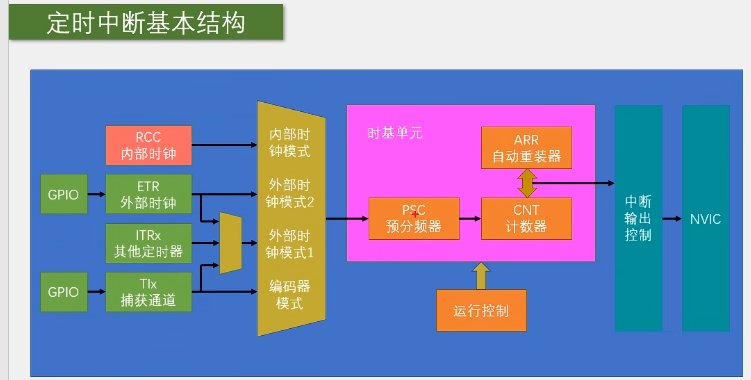
定时中断的基本结构

TIM输出比较

输出比较可以通过比较CNT与CCR寄存器值的关系,来对输出电平进行置1、置换0或翻转的操作,用于输出一定频率和占空比的PWM波形

PWM脉冲宽度调制
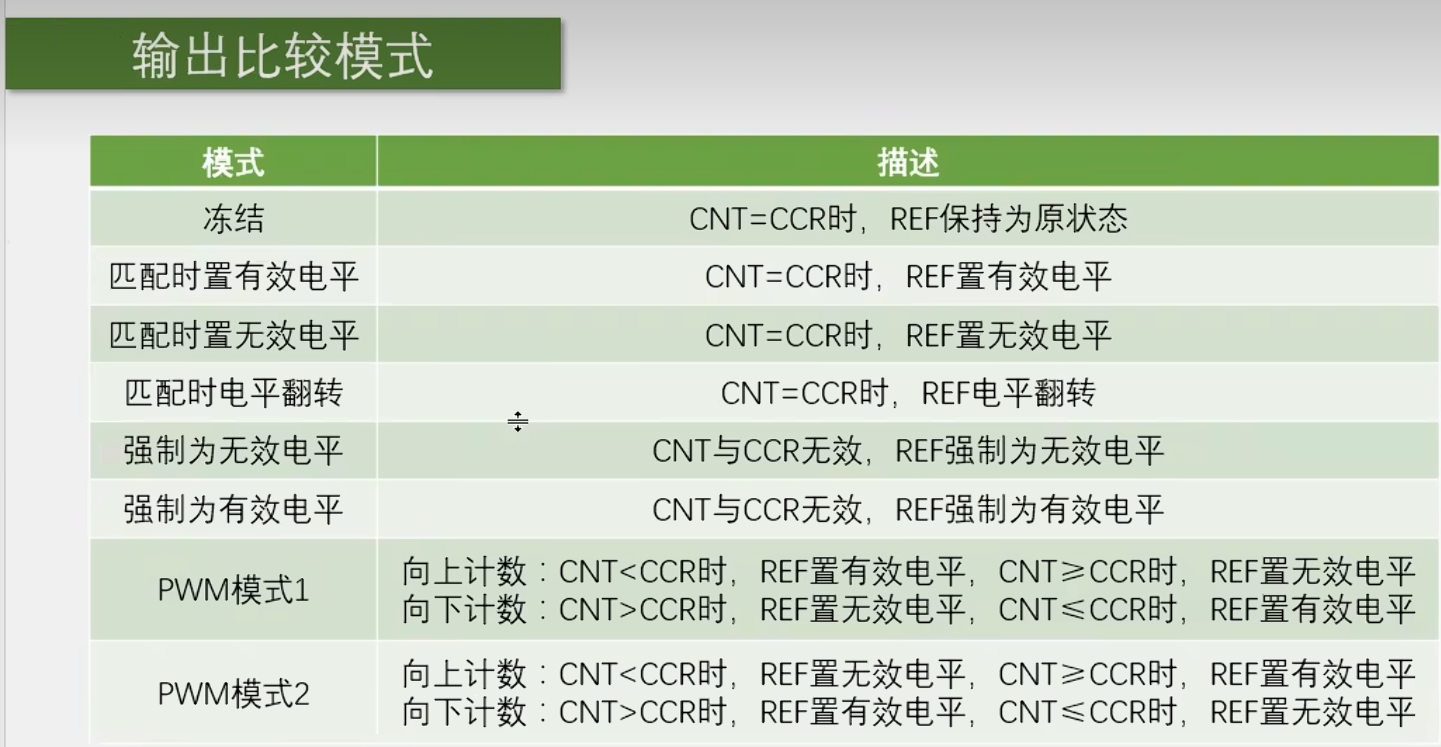
输出比较模式

代码保存

点亮第一个led灯

1
2
3
4
5
6
7
8
9
10
11
12
13
14
15
16
17
18
#include "stm32f10x.h"                  // Device header

int main(void)
{
while(1)
{
RCC_APB2PeriphClockCmd(RCC_APB2Periph_GPIOA,ENABLE);//开启时钟
GPIO_InitTypeDef GPIO_InitStructure;
GPIO_InitStructure.GPIO_Mode=GPIO_Mode_Out_PP;
GPIO_InitStructure.GPIO_Pin=GPIO_Pin_0;
GPIO_InitStructure.GPIO_Speed=GPIO_Speed_50MHz;
GPIO_Init(GPIOA,&GPIO_InitStructure);//完成初始化

GPIO_ResetBits(GPIOA,GPIO_Pin_0);
}

}

led灯闪烁

1
2
3
4
5
6
7
8
9
10
11
12
13
14
15
16
17
18
19
20
21
22
23
24
#include "stm32f10x.h"                  // Device header
#include "Delay.h"

int main(void)
{

RCC_APB2PeriphClockCmd(RCC_APB2Periph_GPIOA,ENABLE);//开启时钟
GPIO_InitTypeDef GPIO_InitStructure;
GPIO_InitStructure.GPIO_Mode=GPIO_Mode_Out_PP;
GPIO_InitStructure.GPIO_Pin=GPIO_Pin_0;
GPIO_InitStructure.GPIO_Speed=GPIO_Speed_50MHz;
GPIO_Init(GPIOA,&GPIO_InitStructure);//完成初始化

GPIO_WriteBit(GPIOA,GPIO_Pin_0,Bit_RESET);

while(1)
{
GPIO_WriteBit(GPIOA,GPIO_Pin_0,Bit_RESET);
Delay_ms(500);
GPIO_WriteBit(GPIOA,GPIO_Pin_0,Bit_SET);
Delay_ms(500);
}
}

led流水灯

1
2
3
4
5
6
7
8
9
10
11
12
13
14
15
16
17
18
19
20
21
22
23
24
25
26
27
28
29
30
31
32
33
34
35
#include "stm32f10x.h"                  // Device header
#include "Delay.h"

int main(void)
{

RCC_APB2PeriphClockCmd(RCC_APB2Periph_GPIOA,ENABLE);//开启时钟
GPIO_InitTypeDef GPIO_InitStructure;
GPIO_InitStructure.GPIO_Mode=GPIO_Mode_Out_OD;
GPIO_InitStructure.GPIO_Pin=GPIO_Pin_All;
GPIO_InitStructure.GPIO_Speed=GPIO_Speed_50MHz;
GPIO_Init(GPIOA,&GPIO_InitStructure);//完成初始化

GPIO_WriteBit(GPIOA,GPIO_Pin_0,Bit_RESET);

while(1)
{
GPIO_Write(GPIOA,~0x0001);//0000 0000 0000 0001;
Delay_ms(500);
GPIO_Write(GPIOA,~0x0002);//0000 0000 0000 0010;
Delay_ms(500);
GPIO_Write(GPIOA,~0x0004);//0000 0000 0000 0100;
Delay_ms(500);
GPIO_Write(GPIOA,~0x0008);//0000 0000 0000 1000;
Delay_ms(500);
GPIO_Write(GPIOA,~0x0010);//0000 0000 0001 0000;
Delay_ms(500);
GPIO_Write(GPIOA,~0x0020);//0000 0000 0010 0000;
Delay_ms(500);
GPIO_Write(GPIOA,~0x0040);//0000 0000 0100 0000;
Delay_ms(500);
GPIO_Write(GPIOA,~0x0080);//0000 0000 1000 0000;
Delay_ms(500);
}
}

蜂鸣器

1
2
3
4
5
6
7
8
9
10
11
12
13
14
15
16
17
18
19
20
21
22
23
24
25
26
27
28
#include "stm32f10x.h"                  // Device header
#include "Delay.h"

int main(void)
{

RCC_APB2PeriphClockCmd(RCC_APB2Periph_GPIOB,ENABLE);//开启时钟
GPIO_InitTypeDef GPIO_InitStructure;
GPIO_InitStructure.GPIO_Mode=GPIO_Mode_Out_PP;
GPIO_InitStructure.GPIO_Pin=GPIO_Pin_12;
GPIO_InitStructure.GPIO_Speed=GPIO_Speed_50MHz;
GPIO_Init(GPIOB,&GPIO_InitStructure);//完成初始化


while(1)
{
GPIO_ResetBits(GPIOB,GPIO_Pin_12);
Delay_ms(500);

GPIO_SetBits(GPIOB,GPIO_Pin_12);
Delay_ms(500);


}

}

按键控制led

1
2
3
4
5
6
7
8
9
10
11
12
13
14
15
16
17
18
19
20
21
22
23
24
25
26
27
28
29
30
31
32
33
34
35
36
37
38
39
40
41
42
43
44
45
46
47
48
49
50
51
52
53
54
55
56
57
58
59
60
61
62
63
64
65
66
67
68
69
70
71
72
73
74
75
76
77
78
79
80
81
82
83
84
85
86
87
88
89
90
91
92
93
94
95
96
97
98
99
100
101
102
#include "stm32f10x.h"                  // Device header
#include "Delay.h"
#include "LED.h"
#include "Key.h"

uint8_t KeyNum;

int main(void)
{
LED_Init();
Key_Init();
while(1)
{
KeyNum=Key_GetNum();
if(KeyNum==1)
{
LED1_ON();
}
if(KeyNum==2)
{
LED1_OFF();
}
}


}

#include "stm32f10x.h" // Device header
#include "Delay.h"
void Key_Init(void)
{
RCC_APB2PeriphClockCmd(RCC_APB2Periph_GPIOB,ENABLE);

GPIO_InitTypeDef GPIO_InitStructure;
GPIO_InitStructure.GPIO_Mode= GPIO_Mode_IPU;
GPIO_InitStructure.GPIO_Pin= GPIO_Pin_1 | GPIO_Pin_11;
GPIO_InitStructure.GPIO_Speed= GPIO_Speed_50MHz;\
GPIO_Init(GPIOB,&GPIO_InitStructure);
}

uint8_t Key_GetNum(void)
{
uint8_t KeyNum=0;
if (GPIO_ReadInputDataBit(GPIOB,GPIO_Pin_1)==0)
{
Delay_ms(20);
while(GPIO_ReadInputDataBit(GPIOB,GPIO_Pin_1)==0);
Delay_ms(20);
KeyNum=1;

}

if (GPIO_ReadInputDataBit(GPIOB,GPIO_Pin_11)==0)
{
Delay_ms(20);
while(GPIO_ReadInputDataBit(GPIOB,GPIO_Pin_1)==0);
Delay_ms(20);
KeyNum=2;

}
return KeyNum;

}


#include "stm32f10x.h" // Device header

void LED_Init(void)
{
RCC_APB2PeriphClockCmd(RCC_APB2Periph_GPIOA,ENABLE);

GPIO_InitTypeDef GPIO_InitStructure;
GPIO_InitStructure.GPIO_Mode= GPIO_Mode_Out_PP;
GPIO_InitStructure.GPIO_Pin= GPIO_Pin_1 | GPIO_Pin_2;
GPIO_InitStructure.GPIO_Speed= GPIO_Speed_50MHz;
GPIO_Init(GPIOA,&GPIO_InitStructure);

GPIO_SetBits(GPIOA,GPIO_Pin_1 | GPIO_Pin_2);
}

void LED1_ON(void)
{
GPIO_ResetBits(GPIOA,GPIO_Pin_1);
}

void LED1_OFF(void)
{
GPIO_SetBits(GPIOA,GPIO_Pin_1);
}

void LED2_ON(void)
{
GPIO_ResetBits(GPIOA,GPIO_Pin_2);
}

void LED2_OFF(void)
{
GPIO_SetBits(GPIOA,GPIO_Pin_2);
}


独立按键控制led

1
2
3
4
5
6
7
8
9
10
11
12
13
14
15
16
17
18
19
20
21
22
23
24
25
26
27
28
29
30
31
32
33
34
35
36
37
38
39
40
41
42
43
44
45
46
47
48
49
50
51
52
53
54
55
56
57
58
59
60
61
62
63
64
65
66
67
68
#include "stm32f10x.h"                  // Device header
#include "Delay.h"
#include "LED.h"
#include "Key.h"

uint8_t KeyNum;

int main(void)
{
LED_Init();
Key_Init();
while(1)
{
KeyNum=Key_GetNum();
if(KeyNum==1)
{
LED1_Turn();
}
if(KeyNum==2)
{
LED2_Turn();
}
}

#include "stm32f10x.h" // Device header
#include "Delay.h"
void Key_Init(void)
{
RCC_APB2PeriphClockCmd(RCC_APB2Periph_GPIOB,ENABLE);

GPIO_InitTypeDef GPIO_InitStructure;
GPIO_InitStructure.GPIO_Mode= GPIO_Mode_IPU;
GPIO_InitStructure.GPIO_Pin= GPIO_Pin_1 | GPIO_Pin_11;
GPIO_InitStructure.GPIO_Speed= GPIO_Speed_50MHz;\
GPIO_Init(GPIOB,&GPIO_InitStructure);
}

uint8_t Key_GetNum(void)
{
uint8_t KeyNum=0;
if (GPIO_ReadInputDataBit(GPIOB,GPIO_Pin_1)==0)
{
Delay_ms(20);
while(GPIO_ReadInputDataBit(GPIOB,GPIO_Pin_1)==0);
Delay_ms(20);
KeyNum=1;

}

if (GPIO_ReadInputDataBit(GPIOB,GPIO_Pin_11)==0)
{
Delay_ms(20);
while(GPIO_ReadInputDataBit(GPIOB,GPIO_Pin_1)==0);
Delay_ms(20);
KeyNum=2;

}
return KeyNum;

}


}


光敏传感器连传感器

1
2
3
4
5
6
7
8
9
10
11
12
13
14
15
16
17
18
19
20
21
22
23
24
25
26
27
28
29
30
31
32
33
34
35
36
37
38
39
40
41
42
43
44
45
46
47
48
#include "stm32f10x.h"                  // Device header
#include "Delay.h"
#include "LED.h"
#include "Key.h"
#include "Buzzer.h"
#include "LightSensor.h"
uint8_t KeyNum;

int main(void)
{
BUZZER_Init();
LightSensor_Init();
while(1)
{
if(LightSensor_Get()==1)
{
BUZZER1_ON();
}
else
{
BUZZER1_OFF();
}
}


}

#include "stm32f10x.h" // Device header

void LightSensor_Init()
{
RCC_APB2PeriphClockCmd(RCC_APB2Periph_GPIOB,ENABLE);

GPIO_InitTypeDef GPIO_InitStructure;
GPIO_InitStructure.GPIO_Mode= GPIO_Mode_IPU;
GPIO_InitStructure.GPIO_Pin= GPIO_Pin_13;
GPIO_InitStructure.GPIO_Speed= GPIO_Speed_50MHz;
GPIO_Init(GPIOB,&GPIO_InitStructure);

GPIO_SetBits(GPIOB,GPIO_Pin_13);
}

uint8_t LightSensor_Get(void)
{
return GPIO_ReadInputDataBit(GPIOB,GPIO_Pin_13);
}

旋转传感器

1
2
3
4
5
6
7
8
9
10
11
12
13
14
15
16
17
18
19
20
21
22
23
24
25
26
27
28
29
30
31
32
33
34
35
36
37
38
39
40
41
42
43
44
45
46
47
48
49
50
51
52
53
54
55
56
57
58
59
60
61
62
63
64
65
66
67
68
69
70
71
72
73
74
75
76
77
78
79
80
81
82
83
84
85
86
87
88
89
90
91
92
93
94
95
96
97
98
99
100
101
102
103
104
105
106
107
108
#include "stm32f10x.h"                  // Device header
#include "Delay.h"
#include "OLED.h"
#include "Encoder.h"

int16_t Num;

int main(void)
{
OLED_Init(); // 初始化OLED
Encoder_Init();

OLED_ShowString(1, 1, "Num:");

while(1)
{
Num += Encoder_Get();
OLED_ShowSignedNum(1,5,Num,5);
}
}


#include "stm32f10x.h" // Device header

int16_t Encoder_Count;

void Encoder_Init(void)
{

RCC_APB2PeriphClockCmd(RCC_APB2Periph_GPIOB, ENABLE);
RCC_APB2PeriphClockCmd(RCC_APB2Periph_AFIO, ENABLE);

GPIO_InitTypeDef GPIO_InitStructure;
GPIO_InitStructure.GPIO_Mode = GPIO_Mode_IPU; // 上拉输入
GPIO_InitStructure.GPIO_Pin = GPIO_Pin_0 | GPIO_Pin_1;
GPIO_InitStructure.GPIO_Speed = GPIO_Speed_50MHz;
GPIO_Init(GPIOB, &GPIO_InitStructure);

GPIO_EXTILineConfig(GPIO_PortSourceGPIOB, GPIO_PinSource0);
GPIO_EXTILineConfig(GPIO_PortSourceGPIOB, GPIO_PinSource1);


EXTI_InitTypeDef EXTI_InitStructure;
EXTI_InitStructure.EXTI_Line = EXTI_Line0 |EXTI_Line1;
EXTI_InitStructure.EXTI_LineCmd = ENABLE;
EXTI_InitStructure.EXTI_Mode = EXTI_Mode_Interrupt;
EXTI_InitStructure.EXTI_Trigger = EXTI_Trigger_Falling; // 下降沿触发
EXTI_Init(&EXTI_InitStructure);

NVIC_PriorityGroupConfig(NVIC_PriorityGroup_2);
NVIC_InitTypeDef NVIC_InitStructure;
NVIC_InitStructure.NVIC_IRQChannel = EXTI0_IRQn;
NVIC_InitStructure.NVIC_IRQChannelCmd = ENABLE;
NVIC_InitStructure.NVIC_IRQChannelPreemptionPriority = 1; // 抢占优先级1
NVIC_InitStructure.NVIC_IRQChannelSubPriority = 1; // 响应优先级1
NVIC_Init(&NVIC_InitStructure);

NVIC_InitStructure.NVIC_IRQChannel = EXTI1_IRQn;
NVIC_InitStructure.NVIC_IRQChannelCmd = ENABLE;
NVIC_InitStructure.NVIC_IRQChannelPreemptionPriority = 1; // 抢占优先级1
NVIC_InitStructure.NVIC_IRQChannelSubPriority = 2; // 响应优先级1
NVIC_Init(&NVIC_InitStructure);
}

int16_t Encoder_Get(void)
{
int16_t Temp;
Temp = Encoder_Count;
Encoder_Count = 0;
return Temp;
}

void EXTI0_IRQHandler(void)
{
if (EXTI_GetITStatus(EXTI_Line0) == SET)
{
if(GPIO_ReadInputDataBit(GPIOB,GPIO_Pin_1) == 0)
{
Encoder_Count --;
}
EXTI_ClearITPendingBit(EXTI_Line0);
}

}

void EXTI1_IRQHandler(void)
{
if (EXTI_GetITStatus(EXTI_Line1) == SET)
{
if(GPIO_ReadInputDataBit(GPIOB,GPIO_Pin_0) == 0)
{
Encoder_Count ++;
}
EXTI_ClearITPendingBit(EXTI_Line1);
}

}


#ifndef __ENCODER_H
#define __ENCODER_H

void Encoder_Init(void);
int16_t Encoder_Get(void);

#endif

PWM

定时中断

1
2
3
4
5
6
7
8
9
10
11
12
13
14
15
16
17
18
19
20
21
22
23
24
25
26
27
28
29
30
31
32
33
34
35
36
37
38
39
40
41
42
43
44
45
46
47
48
49
50
51
52
53
54
55
56
57
58
59
60
61
62
#include "stm32f10x.h"                  // Device header
#include "Delay.h"
#include "OLED.h"
#include "Timer.h"

uint16_t Num;

int main(void)
{
OLED_Init(); // 初始化OLED
Timer_Init();
OLED_ShowString(1, 1, "Num:");

while(1)
{
OLED_ShowNum(1,5,Num,5);
}
}


#include "stm32f10x.h" // Device header

extern uint16_t Num;

void Timer_Init(void)
{
RCC_APB1PeriphClockCmd(RCC_APB1Periph_TIM2,ENABLE);

TIM_InternalClockConfig(TIM2);

TIM_TimeBaseInitTypeDef TIM_TimeBaseInitStructure;
TIM_TimeBaseInitStructure.TIM_ClockDivision= TIM_CKD_DIV1;
TIM_TimeBaseInitStructure.TIM_CounterMode= TIM_CounterMode_Up;
TIM_TimeBaseInitStructure.TIM_Period = 10000-1;
TIM_TimeBaseInitStructure.TIM_Prescaler = 7200-1;
TIM_TimeBaseInitStructure.TIM_RepetitionCounter = 0;
TIM_TimeBaseInit(TIM2,&TIM_TimeBaseInitStructure);

TIM_ITConfig(TIM2,TIM_IT_Update,ENABLE);

NVIC_PriorityGroupConfig(NVIC_PriorityGroup_2);

NVIC_InitTypeDef NVIC_InitStructure;
NVIC_InitStructure.NVIC_IRQChannel = TIM2_IRQn;
NVIC_InitStructure.NVIC_IRQChannelCmd = ENABLE;
NVIC_InitStructure.NVIC_IRQChannelPreemptionPriority = 2; // 抢占优先级1
NVIC_InitStructure.NVIC_IRQChannelSubPriority = 1;
NVIC_Init(&NVIC_InitStructure);

TIM_Cmd(TIM2,ENABLE);
}

void TIM2_IRQHandler(void)
{
if (TIM_GetITStatus(TIM2,TIM_IT_Update) == SET)
{
Num++;
TIM_ClearITPendingBit(TIM2,TIM_IT_Update);
}
}


定时器外部时钟

1
2
3
4
5
6
7
8
9
10
11
12
13
14
15
16
17
18
19
20
21
22
23
24
25
26
27
28
29
30
31
32
33
34
35
36
37
38
39
40
41
42
43
44
45
46
47
48
49
50
51
52
53
54
55
56
57
58
59
60
61
62
63
64
65
66
67
68
69
70
71
72
73
74

#include "stm32f10x.h" // Device header
#include "Delay.h"
#include "OLED.h"
#include "Timer.h"

uint16_t Num;

int main(void)
{
OLED_Init(); // 初始化OLED
Timer_Init();
OLED_ShowString(1, 1, "Num:");
OLED_ShowString(2, 1, "CNT:");

while(1)
{
OLED_ShowNum(1,5,Num,5);
OLED_ShowNum(2,5,Timer_GetCounter(),5);

}
}


#include "stm32f10x.h" // Device header

extern uint16_t Num;

void Timer_Init(void)
{
RCC_APB1PeriphClockCmd(RCC_APB1Periph_TIM2,ENABLE);
RCC_APB2PeriphClockCmd(RCC_APB2Periph_GPIOA,ENABLE);

GPIO_InitTypeDef GPIO_InitStructure;
GPIO_InitStructure.GPIO_Mode = GPIO_Mode_IPU;
GPIO_InitStructure.GPIO_Pin = GPIO_Pin_0;
GPIO_InitStructure.GPIO_Speed = GPIO_Speed_50MHz;
TIM_ETRClockMode2Config(TIM2,TIM_ExtTRGPSC_OFF,TIM_ExtTRGPolarity_NonInverted,0X00);

TIM_TimeBaseInitTypeDef TIM_TimeBaseInitStructure;
TIM_TimeBaseInitStructure.TIM_ClockDivision= TIM_CKD_DIV1;
TIM_TimeBaseInitStructure.TIM_CounterMode= TIM_CounterMode_Up;
TIM_TimeBaseInitStructure.TIM_Period = 10-1;
TIM_TimeBaseInitStructure.TIM_Prescaler = 1-1;
TIM_TimeBaseInitStructure.TIM_RepetitionCounter = 0;
TIM_TimeBaseInit(TIM2,&TIM_TimeBaseInitStructure);

TIM_ITConfig(TIM2,TIM_IT_Update,ENABLE);

NVIC_PriorityGroupConfig(NVIC_PriorityGroup_2);

NVIC_InitTypeDef NVIC_InitStructure;
NVIC_InitStructure.NVIC_IRQChannel = TIM2_IRQn;
NVIC_InitStructure.NVIC_IRQChannelCmd = ENABLE;
NVIC_InitStructure.NVIC_IRQChannelPreemptionPriority = 2; // 抢占优先级1
NVIC_InitStructure.NVIC_IRQChannelSubPriority = 1;
NVIC_Init(&NVIC_InitStructure);

TIM_Cmd(TIM2,ENABLE);
}

uint16_t Timer_GetCounter(void)
{
return TIM_GetCounter(TIM2);
}
void TIM2_IRQHandler(void)
{
if (TIM_GetITStatus(TIM2,TIM_IT_Update) == SET)
{
Num++;
TIM_ClearITPendingBit(TIM2,TIM_IT_Update);
}
}

呼吸灯闪烁

1
2
3
4
5
6
7
8
9
10
11
12
13
14
15
16
17
18
19
20
21
22
23
24
25
26
27
28
29
30
31
32
33
34
35
36
37
38
39
40
41
42
43
44
45
46
47
48
49
50
51
52
53
54
55
56
57
58
59
60
61
62
63
64
65
66
67
68
69
70
71
#include "stm32f10x.h"                  // Device header
#include "Delay.h"
#include "OLED.h"
#include "PWM.h"

uint16_t i;
uint16_t Num;


int main(void)
{
OLED_Init(); // 初始化OLED
PWM_Init();

while(1)
{
for(i=0;i<=100;i++)
{
PWM_SetCompare1(i);
Delay_ms(10);
}
for(i=0;i<=100;i++)
{
PWM_SetCompare1(100-i);
Delay_ms(10);
}
}
}


#include "stm32f10x.h" // Device header

void PWM_Init(void)
{
RCC_APB1PeriphClockCmd(RCC_APB1Periph_TIM2,ENABLE);

RCC_APB2PeriphClockCmd(RCC_APB2Periph_GPIOA,ENABLE);

GPIO_InitTypeDef GPIO_InitStructure;
GPIO_InitStructure.GPIO_Mode= GPIO_Mode_AF_PP;
GPIO_InitStructure.GPIO_Pin= GPIO_Pin_0;
GPIO_InitStructure.GPIO_Speed= GPIO_Speed_50MHz;
GPIO_Init(GPIOA,&GPIO_InitStructure);

TIM_InternalClockConfig(TIM2);

TIM_TimeBaseInitTypeDef TIM_TimeBaseInitStructure;
TIM_TimeBaseInitStructure.TIM_ClockDivision= TIM_CKD_DIV1;
TIM_TimeBaseInitStructure.TIM_CounterMode= TIM_CounterMode_Up;
TIM_TimeBaseInitStructure.TIM_Period = 100-1; ///ARR
TIM_TimeBaseInitStructure.TIM_Prescaler = 720-1; //PSC
TIM_TimeBaseInitStructure.TIM_RepetitionCounter = 0;
TIM_TimeBaseInit(TIM2,&TIM_TimeBaseInitStructure);

TIM_OCInitTypeDef TIM_OCInitStructure;
TIM_OCStructInit(&TIM_OCInitStructure);
TIM_OCInitStructure.TIM_OCMode = TIM_OCMode_PWM1;//输出比较模式
TIM_OCInitStructure.TIM_OCNPolarity = TIM_OCPolarity_High;//输出比较极性
TIM_OCInitStructure.TIM_OutputState = TIM_OutputState_Enable;
TIM_OCInitStructure.TIM_Pulse = 10; //CCR
TIM_OC1Init(TIM2,&TIM_OCInitStructure);

TIM_Cmd(TIM2,ENABLE);
}

void PWM_SetCompare1(uint16_t Compare)
{
TIM_SetCompare1(TIM2,Compare);
}

舵机驱动

1
2
3
4
5
6
7
8
9
10
11
12
13
14
15
16
17
18
19
20
21
22
23
24
25
26
27
28
29
30
31
32
33
34
35
36
37
38
39
40
41
42
43
44
45
46
47
48
49
50
51
52
53
54
55
56
57
#include "stm32f10x.h"                  // Device header
#include "Delay.h"
#include "OLED.h"
#include "SERVE.h"
#include "KEY.h"


uint16_t i;
uint16_t Num;
uint16_t KeyNum;
float Angle;


int main(void)
{
OLED_Init(); // 初始化OLED
Serve_Init();
Key_Init();

OLED_ShowString(1,1,"Angle:");

Serve_SetAngle(90);
while(1)
{
KeyNum = Key_GetNum();
if(KeyNum == 1)
{
Angle +=30;
if(Angle>180)
{
Angle = 0;
}
}
Serve_SetAngle(Angle);
OLED_ShowNum(1,7,Angle,3);
}
}


#include "stm32f10x.h" // Device header
#include "PWM.h"

void Serve_Init(void)
{
PWM_Init();

}


void Serve_SetAngle(float Angle)
{
PWM_SetCompare2(Angle / 180*2000+500);

}

电机驱动

1
2
3
4
5
6
7
8
9
10
11
12
13
14
15
16
17
18
19
20
21
22
23
24
25
26
27
28
29
30
31
32
33
34
35
36
37
38
39
40
41
42
43
44
45
46
47
48
49
50
51
52
53
54
55
56
57
58
59
60
61
62
63
64
65
66
67
68
69
70
71
72
73
74
#include "stm32f10x.h"                  // Device header
#include "Delay.h"
#include "OLED.h"
#include "Moter.h"
#include "Key.h"

int8_t Speed;
uint16_t Num;
uint16_t KeyNum;


int main(void)
{
OLED_Init(); // 初始化OLED
Moter_Init();
Key_Init();

OLED_ShowString(1,1,"Speed:");
while(1)
{
KeyNum = Key_GetNum();
if(KeyNum == 1)
{
Speed += 20;
if(Speed>100)
{
Speed = -100;
}
}
Moter_SetSpeed(Speed);
OLED_ShowSignedNum(1,7,Speed,3);
}
}


#include "stm32f10x.h" // Device header
#include "pwm.h"

void Moter_Init(void)
{
RCC_APB2PeriphClockCmd(RCC_APB2Periph_GPIOA,ENABLE);

GPIO_InitTypeDef GPIO_InitStructure;
GPIO_InitStructure.GPIO_Mode= GPIO_Mode_Out_PP;
GPIO_InitStructure.GPIO_Pin= GPIO_Pin_4 | GPIO_Pin_5;
GPIO_InitStructure.GPIO_Speed= GPIO_Speed_50MHz;
GPIO_Init(GPIOA,&GPIO_InitStructure);

PWM_Init();

}

void Moter_SetSpeed(int8_t Speed)
{
if (Speed>=0)
{
GPIO_SetBits(GPIOA,GPIO_Pin_4);
GPIO_ResetBits(GPIOA,GPIO_Pin_5);
PWM_SetCompare3(Speed);
}
else
{
GPIO_ResetBits(GPIOA,GPIO_Pin_5);
GPIO_SetBits(GPIOA,GPIO_Pin_4);

PWM_SetCompare3(-Speed);

}

}

输入捕获模式测频率

1
2
3
4
5
6
7
8
9
10
11
12
13
14
15
16
17
18
19
20
21
22
23
24
25
26
27
28
29
30
31
32
33
34
35
36
37
38
39
40
41
42
43
44
45
46
47
48
49
50
51
52
53
54
55
56
57
58
59
60
61
62
63
64
65
66
67
68
69
70
71
#include "stm32f10x.h"                  // Device header
#include "Delay.h"
#include "OLED.h"
#include "PWM.h"
#include "IC.h"

uint16_t i;
uint16_t Num;


int main(void)
{
OLED_Init(); // 初始化OLED
PWM_Init();
IC_Init();

OLED_ShowString(1,1,"Freq:00000Hz");

PWM_SetPrescaler(720-1);
PWM_SetCompare1(50);

while(1)
{
OLED_ShowNum(1,6,IC_GetFreq(),5);
}
}


#include "stm32f10x.h" // Device header

void IC_Init(void)
{
RCC_APB1PeriphClockCmd(RCC_APB1Periph_TIM3,ENABLE);

RCC_APB2PeriphClockCmd(RCC_APB2Periph_GPIOA,ENABLE);

GPIO_InitTypeDef GPIO_InitStructure;
GPIO_InitStructure.GPIO_Mode= GPIO_Mode_IPU;
GPIO_InitStructure.GPIO_Pin= GPIO_Pin_6;
GPIO_InitStructure.GPIO_Speed= GPIO_Speed_50MHz;
GPIO_Init(GPIOA,&GPIO_InitStructure);

TIM_InternalClockConfig(TIM3);

TIM_TimeBaseInitTypeDef TIM_TimeBaseInitStructure;
TIM_TimeBaseInitStructure.TIM_ClockDivision= TIM_CKD_DIV1;
TIM_TimeBaseInitStructure.TIM_CounterMode= TIM_CounterMode_Up;
TIM_TimeBaseInitStructure.TIM_Period = 65536-1; ///ARR
TIM_TimeBaseInitStructure.TIM_Prescaler = 72-1; //PSC
TIM_TimeBaseInitStructure.TIM_RepetitionCounter = 0;
TIM_TimeBaseInit(TIM3,&TIM_TimeBaseInitStructure);

TIM_ICInitTypeDef TIM_ICInitStructure;
TIM_ICInitStructure.TIM_Channel = TIM_Channel_1;
TIM_ICInitStructure.TIM_ICFilter= 0xF;
TIM_ICInitStructure.TIM_ICPolarity=TIM_ICPolarity_Rising;
TIM_ICInitStructure.TIM_ICPrescaler=TIM_ICPSC_DIV1;
TIM_ICInitStructure.TIM_ICSelection=TIM_ICSelection_DirectTI;
TIM_ICInit(TIM3,&TIM_ICInitStructure);

TIM_SelectInputTrigger(TIM3,TIM_TS_TI1FP1);
TIM_SelectSlaveMode(TIM3,TIM_SlaveMode_Reset);

TIM_Cmd(TIM3,ENABLE);
}

uint32_t IC_GetFreq(void)
{
return 1000000/(TIM_GetCapture1(TIM3)+1);
}

PWMI模式测频率占空比

1
2
3
4
5
6
7
8
9
10
11
12
13
14
15
16
17
18
19
20
21
22
23
24
25
26
27
28
29
30
31
32
33
34
35
36
37
38
39
40
41
42
43
44
45
46
47
48
49
50
51
52
53
54
55
56
57
58
59
60
61
62
63
64
65
66
67
68
69
70
71
72
73
74
75
76
77
78
79
80
#include "stm32f10x.h"                  // Device header
#include "Delay.h"
#include "OLED.h"
#include "PWM.h"
#include "IC.h"

uint16_t i;
uint16_t Num;


int main(void)
{
OLED_Init(); // 初始化OLED
PWM_Init();
IC_Init();

OLED_ShowString(1,1,"Freq:00000Hz");
OLED_ShowString(2,1,"Duty:00%");

PWM_SetPrescaler(720-1);
PWM_SetCompare1(50);

while(1)
{
OLED_ShowNum(1,6,IC_GetFreq(),5);
OLED_ShowNum(2,6,IC_GetDuty(),2);

}
}


#include "stm32f10x.h" // Device header

void IC_Init(void)
{
RCC_APB1PeriphClockCmd(RCC_APB1Periph_TIM3,ENABLE);

RCC_APB2PeriphClockCmd(RCC_APB2Periph_GPIOA,ENABLE);

GPIO_InitTypeDef GPIO_InitStructure;
GPIO_InitStructure.GPIO_Mode= GPIO_Mode_IPU;
GPIO_InitStructure.GPIO_Pin= GPIO_Pin_6;
GPIO_InitStructure.GPIO_Speed= GPIO_Speed_50MHz;
GPIO_Init(GPIOA,&GPIO_InitStructure);

TIM_InternalClockConfig(TIM3);

TIM_TimeBaseInitTypeDef TIM_TimeBaseInitStructure;
TIM_TimeBaseInitStructure.TIM_ClockDivision= TIM_CKD_DIV1;
TIM_TimeBaseInitStructure.TIM_CounterMode= TIM_CounterMode_Up;
TIM_TimeBaseInitStructure.TIM_Period = 65536-1; ///ARR
TIM_TimeBaseInitStructure.TIM_Prescaler = 72-1; //PSC
TIM_TimeBaseInitStructure.TIM_RepetitionCounter = 0;
TIM_TimeBaseInit(TIM3,&TIM_TimeBaseInitStructure);

TIM_ICInitTypeDef TIM_ICInitStructure;
TIM_ICInitStructure.TIM_Channel = TIM_Channel_1;
TIM_ICInitStructure.TIM_ICFilter= 0xF;
TIM_ICInitStructure.TIM_ICPolarity=TIM_ICPolarity_Rising;
TIM_ICInitStructure.TIM_ICPrescaler=TIM_ICPSC_DIV1;
TIM_ICInitStructure.TIM_ICSelection=TIM_ICSelection_DirectTI;
TIM_PWMIConfig(TIM3,&TIM_ICInitStructure);

TIM_SelectInputTrigger(TIM3,TIM_TS_TI1FP1);
TIM_SelectSlaveMode(TIM3,TIM_SlaveMode_Reset);

TIM_Cmd(TIM3,ENABLE);
}

uint32_t IC_GetFreq(void)
{
return 1000000/(TIM_GetCapture1(TIM3)+1);
}

uint32_t IC_GetDuty(void)
{
return (TIM_GetCapture2(TIM3)+1)*100/(TIM_GetCapture1(TIM3)+1);
}

测数

1
2
3
4
5
6
7
8
9
10
11
12
13
14
15
16
17
18
19
20
21
22
23
24
25
26
27
28
29
30
31
32
33
34
35
36
37
38
39
40
41
42
43
44
45
46
47
48
49
50
51
52
53
54
55
56
57
58
59
60
61
62
63
64
65
66
67
68
69
70
71
72
#include "stm32f10x.h"                  // Device header
#include "Delay.h"
#include "OLED.h"
#include "Timer.h"
#include "encod.h"

uint16_t Num;
int16_t Speed;

int main(void)
{
OLED_Init(); // 初始化OLED
//Timer_Init();
Encod_Init();
OLED_ShowString(1, 1, "CNT:");

while(1)
{
OLED_ShowSignedNum(1,5,Encod_Get(),5);
Delay_ms(1000);
}
}


#include "stm32f10x.h" // Device header


void Encod_Init()
{
RCC_APB1PeriphClockCmd(RCC_APB1Periph_TIM3,ENABLE);

RCC_APB2PeriphClockCmd(RCC_APB2Periph_GPIOA,ENABLE);

GPIO_InitTypeDef GPIO_InitStructure;
GPIO_InitStructure.GPIO_Mode= GPIO_Mode_IPU;
GPIO_InitStructure.GPIO_Pin= GPIO_Pin_6 | GPIO_Pin_7;
GPIO_InitStructure.GPIO_Speed= GPIO_Speed_50MHz;
GPIO_Init(GPIOA,&GPIO_InitStructure);


TIM_TimeBaseInitTypeDef TIM_TimeBaseInitStructure;
TIM_TimeBaseInitStructure.TIM_ClockDivision= TIM_CKD_DIV1;
TIM_TimeBaseInitStructure.TIM_CounterMode= TIM_CounterMode_Up;
TIM_TimeBaseInitStructure.TIM_Period = 65536-1; ///ARR
TIM_TimeBaseInitStructure.TIM_Prescaler = 1-1; //PSC
TIM_TimeBaseInitStructure.TIM_RepetitionCounter = 0;
TIM_TimeBaseInit(TIM3,&TIM_TimeBaseInitStructure);

TIM_ICInitTypeDef TIM_ICInitStructure;
TIM_ICStructInit(&TIM_ICInitStructure);
TIM_ICInitStructure.TIM_Channel = TIM_Channel_1;
TIM_ICInitStructure.TIM_ICFilter= 0xF;
TIM_ICInit(TIM3,&TIM_ICInitStructure);
TIM_ICInitStructure.TIM_Channel = TIM_Channel_2;
TIM_ICInitStructure.TIM_ICFilter= 0xF;
TIM_ICInit(TIM3,&TIM_ICInitStructure);

TIM_EncoderInterfaceConfig(TIM3,TIM_EncoderMode_TI12,TIM_ICPolarity_Rising,TIM_ICPolarity_Rising);

TIM_Cmd(TIM3,ENABLE);
}

int16_t Encod_Get(void)
{
int16_t temp;
temp = TIM_GetCounter(TIM3);
TIM_SetCounter(TIM3,0);
return temp;

}

AD转换器

AD单通道

1
2
3
4
5
6
7
8
9
10
11
12
13
14
15
16
17
18
19
20
21
22
23
24
25
26
27
28
29
30
31
32
33
34
35
36
37
38
39
40
41
42
43
44
45
46
47
48
49
50
51
52
53
54
55
56
57
58
59
60
61
62
63
64
65
66
67
68
69
70
71
72
73
74
75
76
#include "stm32f10x.h"                  // Device header
#include "Delay.h"
#include "OLED.h"
#include "Timer.h"
#include "AD.h"


uint16_t ADValue;
uint16_t Num;
float Voltage;

int main(void)
{
OLED_Init(); // 初始化OLED
AD_Init();

OLED_ShowString(1,1,"ADValue:");
OLED_ShowString(2,1,"Voltage:");

while(1)
{
ADValue = AD_GetValue();
Voltage = (float)ADValue/4095*3.3;

OLED_ShowNum(1,9,ADValue,4);
OLED_ShowNum(2,9,Voltage,1);
OLED_ShowNum(2,11,(uint16_t)(Voltage*100)%100,1);

Delay_ms(100);
}
}


#include "stm32f10x.h" // Device header

void AD_Init(void)
{
RCC_APB2PeriphClockCmd(RCC_APB2Periph_ADC1,ENABLE);
RCC_APB2PeriphClockCmd(RCC_APB2Periph_GPIOA,ENABLE);

RCC_ADCCLKConfig(RCC_PCLK2_Div6);

GPIO_InitTypeDef GPIO_InitStructure;
GPIO_InitStructure.GPIO_Mode= GPIO_Mode_AIN;
GPIO_InitStructure.GPIO_Pin= GPIO_Pin_0;
GPIO_InitStructure.GPIO_Speed= GPIO_Speed_50MHz;
GPIO_Init(GPIOA,&GPIO_InitStructure);

ADC_RegularChannelConfig(ADC1,ADC_Channel_0,1,ADC_SampleTime_55Cycles5);

ADC_InitTypeDef ADC_InitStructure;
ADC_InitStructure.ADC_Mode=ADC_Mode_Independent;
ADC_InitStructure.ADC_DataAlign=ADC_DataAlign_Right;
ADC_InitStructure.ADC_ExternalTrigConv=ADC_ExternalTrigConv_None;
ADC_InitStructure.ADC_ContinuousConvMode=DISABLE;
ADC_InitStructure.ADC_ScanConvMode=DISABLE;
ADC_InitStructure.ADC_NbrOfChannel=1;
ADC_Init(ADC1,&ADC_InitStructure);

ADC_Cmd(ADC1,ENABLE);

ADC_ResetCalibration(ADC1);
while(ADC_GetCalibrationStatus(ADC1)==SET);
ADC_StartCalibration(ADC1);
while(ADC_GetCalibrationStatus(ADC1)==SET);
}

uint16_t AD_GetValue(void)
{
ADC_SoftwareStartConvCmd(ADC1,ENABLE);
while(ADC_GetFlagStatus(ADC1,ADC_FLAG_EOC)==RESET);
return ADC_GetConversionValue(ADC1);
}

AD多通道

1
2
3
4
5
6
7
8
9
10
11
12
13
14
15
16
17
18
19
20
21
22
23
24
25
26
27
28
29
30
31
32
33
34
35
36
37
38
39
40
41
42
43
44
45
46
47
48
49
50
51
52
53
54
55
56
57
58
59
60
61
62
63
64
65
66
67
68
69
70
71
72
73
74
75
76
77
78
79
80
81
82
83
84
85
#include "stm32f10x.h"                  // Device header
#include "Delay.h"
#include "OLED.h"
#include "Timer.h"
#include "AD.h"


uint16_t AD0,AD1,AD2,AD3;
uint16_t Num;
float Voltage;

int main(void)
{
OLED_Init(); // 初始化OLED
AD_Init();

OLED_ShowString(1,1,"AD0:");
OLED_ShowString(2,1,"AD1:");
OLED_ShowString(3,1,"AD2:");
OLED_ShowString(4,1,"AD3:");


while(1)
{
AD0=AD_GetValue(ADC_Channel_0);
AD0=AD_GetValue(ADC_Channel_1);
AD0=AD_GetValue(ADC_Channel_2);
AD0=AD_GetValue(ADC_Channel_3);

OLED_ShowNum(1,5,AD0,4);
OLED_ShowNum(2,5,AD1,4);
OLED_ShowNum(3,5,AD2,4);
OLED_ShowNum(4,5,AD3,4);

Delay_ms(100);
}
}


#include "stm32f10x.h" // Device header

void AD_Init(void)
{
RCC_APB2PeriphClockCmd(RCC_APB2Periph_ADC1,ENABLE);
RCC_APB2PeriphClockCmd(RCC_APB2Periph_GPIOA,ENABLE);

RCC_ADCCLKConfig(RCC_PCLK2_Div6);

GPIO_InitTypeDef GPIO_InitStructure;
GPIO_InitStructure.GPIO_Mode= GPIO_Mode_AIN;
GPIO_InitStructure.GPIO_Pin= GPIO_Pin_0 | GPIO_Pin_1 | GPIO_Pin_2 |GPIO_Pin_3;
GPIO_InitStructure.GPIO_Speed= GPIO_Speed_50MHz;
GPIO_Init(GPIOA,&GPIO_InitStructure);


ADC_InitTypeDef ADC_InitStructure;
ADC_InitStructure.ADC_Mode=ADC_Mode_Independent;
ADC_InitStructure.ADC_DataAlign=ADC_DataAlign_Right;
ADC_InitStructure.ADC_ExternalTrigConv=ADC_ExternalTrigConv_None;
ADC_InitStructure.ADC_ContinuousConvMode=DISABLE;
ADC_InitStructure.ADC_ScanConvMode=DISABLE;
ADC_InitStructure.ADC_NbrOfChannel=1;
ADC_Init(ADC1,&ADC_InitStructure);

ADC_Cmd(ADC1,ENABLE);

ADC_ResetCalibration(ADC1);
while(ADC_GetCalibrationStatus(ADC1)==SET);
ADC_StartCalibration(ADC1);
while(ADC_GetCalibrationStatus(ADC1)==SET);
}

uint16_t AD_GetValue(uint16_t ADC_Channel)
{
ADC_RegularChannelConfig(ADC1,ADC_Channel,1,ADC_SampleTime_55Cycles5);

ADC_SoftwareStartConvCmd(ADC1,ENABLE);
while(ADC_GetFlagStatus(ADC1,ADC_FLAG_EOC)==RESET);
return ADC_GetConversionValue(ADC1);
}

DMA存储器

DMA数据转运

1
2
3
4
5
6
7
8
9
10
11
12
13
14
15
16
17
18
19
20
21
22
23
24
25
26
27
28
29
30
31
32
33
34
35
36
37
38
39
40
41
42
43
44
45
46
47
48
49
50
51
52
53
54
55
56
57
58
59
60
61
62
63
64
65
66
67
68
69
70
71
72
73
74
75
76
77
78
79
80
81
82
83
84
85
86
87
88
89
90
91
92
93
94
95
96
97
98
99
100
101
102
103
#include "stm32f10x.h"                  // Device header
#include "Delay.h"
#include "OLED.h"
#include "Timer.h"
#include "MyDMA.h"


uint16_t Num;
uint16_t DataA[] = {0x01,0x02,0x03,0x04};
uint16_t DataB[] = {0,0,0,0};
int main(void)
{
OLED_Init(); // 初始化OLED
MyDMA_Init((uint32_t)DataA,(uint32_t)DataB,4);

OLED_ShowString(1,1,"DataA");
OLED_ShowString(3,1,"DataB");
OLED_ShowHexNum(1,8,(uint32_t)DataA,8);
OLED_ShowHexNum(3,8,(uint32_t)DataB,8);


OLED_ShowHexNum(2,1,DataA[0],2);
OLED_ShowHexNum(2,4,DataA[1],2);
OLED_ShowHexNum(2,7,DataA[2],2);
OLED_ShowHexNum(2,10,DataA[3],2);
OLED_ShowHexNum(4,1,DataB[0],2);
OLED_ShowHexNum(4,4,DataB[1],2);
OLED_ShowHexNum(4,7,DataB[2],2);
OLED_ShowHexNum(4,10,DataB[3],2);


while(1)
{
DataA[0] ++;
DataA[1] ++;
DataA[2] ++;
DataA[3] ++;

OLED_ShowHexNum(2,1,DataA[0],2);
OLED_ShowHexNum(2,4,DataA[1],2);
OLED_ShowHexNum(2,7,DataA[2],2);
OLED_ShowHexNum(2,10,DataA[3],2);
OLED_ShowHexNum(4,1,DataB[0],2);
OLED_ShowHexNum(4,4,DataB[1],2);
OLED_ShowHexNum(4,7,DataB[2],2);
OLED_ShowHexNum(4,10,DataB[3],2);

Delay_ms(1000);

MyDMA_Transfer();

OLED_ShowHexNum(2,1,DataA[0],2);
OLED_ShowHexNum(2,4,DataA[1],2);
OLED_ShowHexNum(2,7,DataA[2],2);
OLED_ShowHexNum(2,10,DataA[3],2);
OLED_ShowHexNum(4,1,DataB[0],2);
OLED_ShowHexNum(4,4,DataB[1],2);
OLED_ShowHexNum(4,7,DataB[2],2);
OLED_ShowHexNum(4,10,DataB[3],2);

Delay_ms(1000);
}
}


#include "stm32f10x.h" // Device header

uint16_t MyDMA_Size;

void MyDMA_Init(uint32_t ADDrA,uint32_t ADDrB,uint16_t Size)
{
MyDMA_Size=Size;
RCC_AHBPeriphClockCmd(RCC_AHBPeriph_DMA1,ENABLE);

DMA_InitTypeDef DMA_InitStructure;
DMA_InitStructure.DMA_PeripheralBaseAddr = ADDrA;
DMA_InitStructure.DMA_PeripheralDataSize = DMA_PeripheralDataSize_Byte;
DMA_InitStructure.DMA_PeripheralInc = DMA_PeripheralInc_Enable;
DMA_InitStructure.DMA_MemoryBaseAddr = ADDrB;
DMA_InitStructure.DMA_MemoryDataSize = DMA_MemoryDataSize_Byte;
DMA_InitStructure.DMA_MemoryInc = DMA_MemoryInc_Enable;
DMA_InitStructure.DMA_DIR = DMA_DIR_PeripheralSRC;
DMA_InitStructure.DMA_BufferSize = Size;
DMA_InitStructure.DMA_Mode = DMA_Mode_Normal;
DMA_InitStructure.DMA_M2M = DMA_M2M_Enable;
DMA_InitStructure.DMA_Priority = DMA_Priority_Medium;
DMA_Init(DMA1_Channel1,&DMA_InitStructure);

DMA_Cmd(DMA1_Channel1,DISABLE);
}

void MyDMA_Transfer(void)
{
DMA_Cmd(DMA1_Channel1,DISABLE);
DMA_SetCurrDataCounter(DMA1_Channel1,MyDMA_Size);
DMA_Cmd(DMA1_Channel1,ENABLE);

while(DMA_GetFlagStatus(DMA1_FLAG_TC1)==RESET);
DMA_ClearFlag(DMA1_FLAG_TC1);

}

DMA+AD通道

1
2
3
4
5
6
7
8
9
10
11
12
13
14
15
16
17
18
19
20
21
22
23
24
25
26
27
28
29
30
31
32
33
34
35
36
37
38
39
40
41
42
43
44
45
46
47
48
49
50
51
52
53
54
55
56
57
58
59
60
61
62
63
64
65
66
67
68
69
70
71
72
73
74
75
76
77
78
79
80
81
82
83
84
85
86
87
88
89
90
91
92
93
94
95
96
97
98
99
100
101
102
103
104
105
106
107
108
109
110
111
#include "stm32f10x.h"                  // Device header
#include "Delay.h"
#include "OLED.h"
#include "Timer.h"
#include "AD.h"


uint16_t Num;
float Voltage;

int main(void)
{
OLED_Init(); // 初始化OLED
AD_Init();

OLED_ShowString(1,1,"AD0:");
OLED_ShowString(2,1,"AD1:");
OLED_ShowString(3,1,"AD2:");
OLED_ShowString(4,1,"AD3:");


while(1)
{
AD_GetValue();

OLED_ShowNum(1,5,AD_Value[0],4);
OLED_ShowNum(2,5,AD_Value[1],4);
OLED_ShowNum(3,5,AD_Value[2],4);
OLED_ShowNum(4,5,AD_Value[3],4);

Delay_ms(100);
}
}


#include "stm32f10x.h" // Device header

uint16_t AD_Value[4];

void AD_Init(void)
{
RCC_APB2PeriphClockCmd(RCC_APB2Periph_ADC1,ENABLE);
RCC_APB2PeriphClockCmd(RCC_APB2Periph_GPIOA,ENABLE);
RCC_AHBPeriphClockCmd(RCC_AHBPeriph_DMA1,ENABLE);


RCC_ADCCLKConfig(RCC_PCLK2_Div6);

GPIO_InitTypeDef GPIO_InitStructure;
GPIO_InitStructure.GPIO_Mode= GPIO_Mode_AIN;
GPIO_InitStructure.GPIO_Pin= GPIO_Pin_0 | GPIO_Pin_1 | GPIO_Pin_2 |GPIO_Pin_3;
GPIO_InitStructure.GPIO_Speed= GPIO_Speed_50MHz;
GPIO_Init(GPIOA,&GPIO_InitStructure);

ADC_RegularChannelConfig(ADC1,ADC_Channel_0,1,ADC_SampleTime_55Cycles5);
ADC_RegularChannelConfig(ADC1,ADC_Channel_1,2,ADC_SampleTime_55Cycles5);
ADC_RegularChannelConfig(ADC1,ADC_Channel_2,3,ADC_SampleTime_55Cycles5);
ADC_RegularChannelConfig(ADC1,ADC_Channel_3,4,ADC_SampleTime_55Cycles5);


ADC_InitTypeDef ADC_InitStructure;
ADC_InitStructure.ADC_Mode=ADC_Mode_Independent;
ADC_InitStructure.ADC_DataAlign=ADC_DataAlign_Right;
ADC_InitStructure.ADC_ExternalTrigConv=ADC_ExternalTrigConv_None;
ADC_InitStructure.ADC_ContinuousConvMode=DISABLE;
ADC_InitStructure.ADC_ScanConvMode=ENABLE;
ADC_InitStructure.ADC_NbrOfChannel=4;
ADC_Init(ADC1,&ADC_InitStructure);


DMA_InitTypeDef DMA_InitStructure;
DMA_InitStructure.DMA_PeripheralBaseAddr = (uint32_t)&ADC1->DR;
DMA_InitStructure.DMA_PeripheralDataSize = DMA_PeripheralDataSize_HalfWord;
DMA_InitStructure.DMA_PeripheralInc = DMA_PeripheralInc_Disable;
DMA_InitStructure.DMA_MemoryBaseAddr = (uint32_t)AD_Value;
DMA_InitStructure.DMA_MemoryDataSize = DMA_MemoryDataSize_HalfWord;
DMA_InitStructure.DMA_MemoryInc = DMA_MemoryInc_Enable;
DMA_InitStructure.DMA_DIR = DMA_DIR_PeripheralSRC;
DMA_InitStructure.DMA_BufferSize = 4;
DMA_InitStructure.DMA_Mode = DMA_Mode_Normal;
DMA_InitStructure.DMA_M2M = DMA_M2M_Disable;
DMA_InitStructure.DMA_Priority = DMA_Priority_Medium;
DMA_Init(DMA1_Channel1,&DMA_InitStructure);

DMA_Cmd(DMA1_Channel1,ENABLE);

ADC_DMACmd(ADC1,ENABLE);

ADC_Cmd(ADC1,ENABLE);

ADC_ResetCalibration(ADC1);
while(ADC_GetCalibrationStatus(ADC1)==SET);
ADC_StartCalibration(ADC1);
while(ADC_GetCalibrationStatus(ADC1)==SET);
}

uint16_t AD_GetValue( void)
{
DMA_Cmd(DMA1_Channel1,DISABLE);
DMA_SetCurrDataCounter(DMA1_Channel1,4);
DMA_Cmd(DMA1_Channel1,ENABLE);

ADC_SoftwareStartConvCmd(ADC1,ENABLE);

while(DMA_GetFlagStatus(DMA1_FLAG_TC1)==RESET);
DMA_ClearFlag(DMA1_FLAG_TC1);
}